



Visitors to Peru City Cemetery may have noticed the impressive stone mausoleum bearing the name WHITTLE. With its stately columns and substantial stonework, it looks like the final resting place of a wealthy and prominent family. But the story behind it is quite unexpected—and perhaps more interesting.
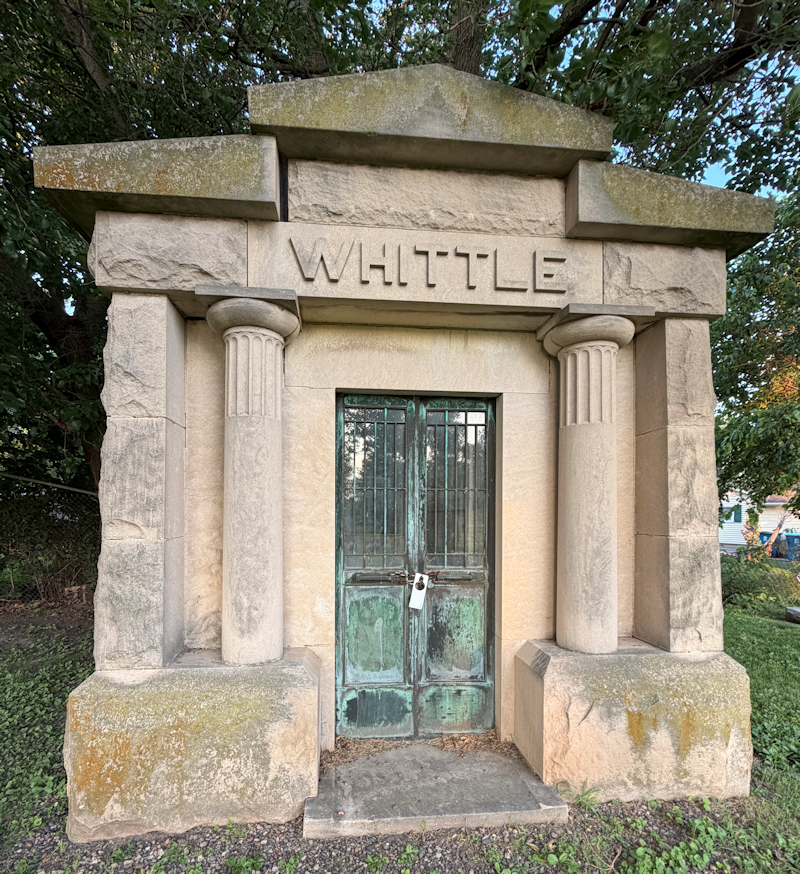
The mausoleum owes its existence to William Packer, an English immigrant who spent much of his life working as a coal miner in the Illinois Valley.
Born in Gloucestershire, England, Packer followed other members of his family to the Illinois Valley during the nineteenth century. By 1900, he was living with his sister Annie, her husband John Whittle, and their three children: Alice, Stella, and John Jr. Packer never married, and the Whittles became his family and home.

In 1913, tragedy struck when Packer’s niece, Alice, a 34-year-old schoolteacher, died following a sudden illness. Less than a year later, her younger sister Stella died of pneumonia in Chicago. Both women were still young, and their deaths must have been devastating to the family.
Then, in September 1918, William Packer died at age 63.
What happened next revealed something surprising about the quiet coal miner.
Although Packer had spent his working life in the mines, he had accumulated a substantial estate. Rather than simply saving his wages, he had invested money in promissory notes, many secured by real estate. His estate eventually produced more than $4,500—an impressive sum in 1918 (about $100,000 in today’s dollars).
But the greatest surprise was his will.
Packer left his remaining estate to his nephew, John Whittle Jr., with a very specific instruction: the money was to be used to construct a family mausoleum in Peru City Cemetery. His own remains and those of Alice and Stella were to be placed inside. Eventually, Annie, her husband John, and their son John Jr. were to join them.
John carried out his uncle’s wishes. By December 1919, the mausoleum had been completed, and the family members who had already died had been placed inside. According to the executor’s final accounting, nearly $4,000 had been spent on its construction.
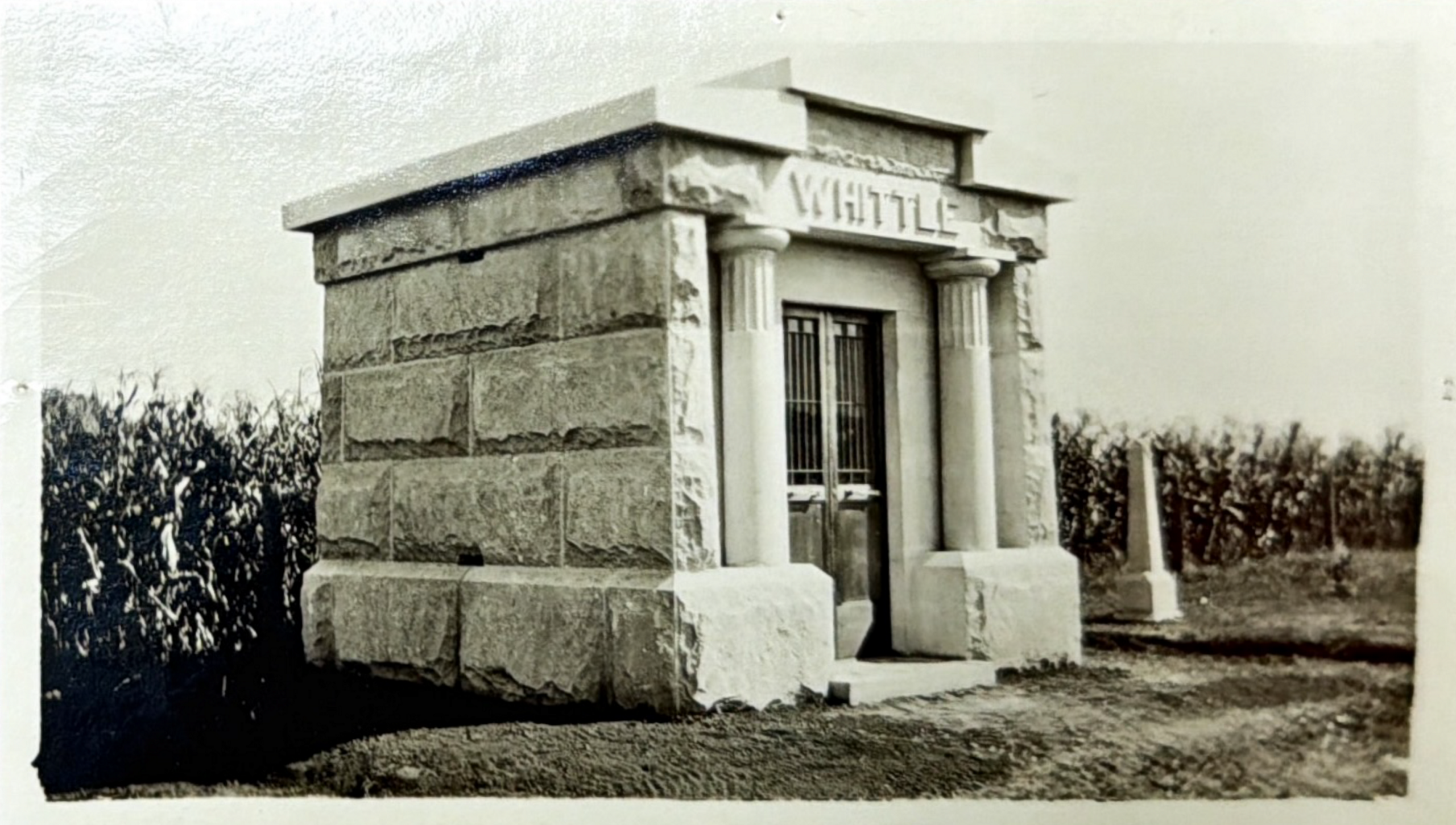
Remarkably, the probate file contains a photograph of the newly completed mausoleum, preserved more than a century ago as part of the settlement of Packer’s estate.
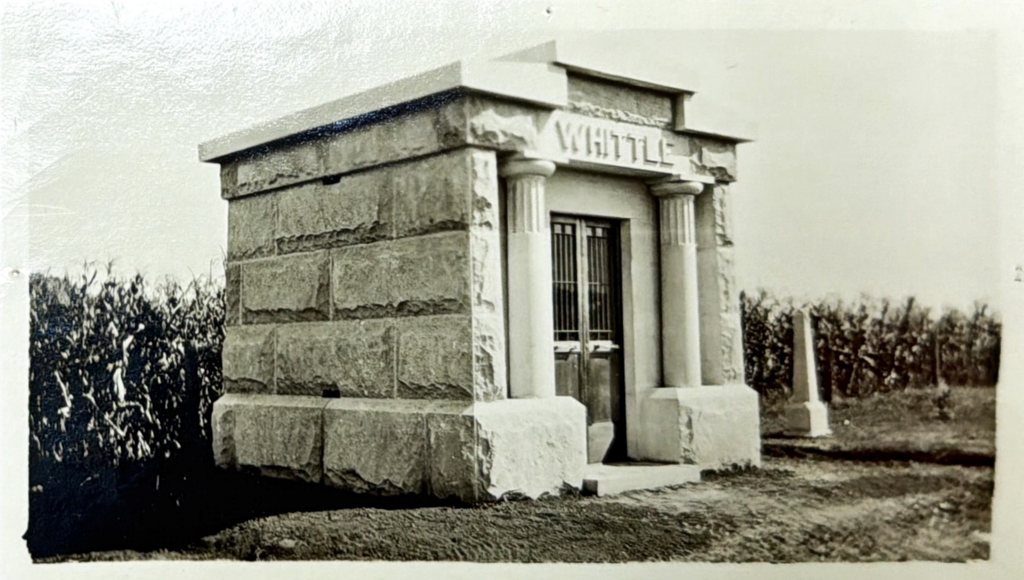
Over the following decades, the remaining members of the family joined their loved ones. Annie died in 1919, John Whittle Sr. in 1925, and John Jr. in 1955.
Today, the mausoleum stands as William Packer intended—a permanent resting place for the family with whom he shared his life.
And although the name carved above its entrance is WHITTLE, the monument itself is the unexpected legacy of a coal miner named William Packer.
For a more detailed history of the Packer and Whittle family and list of sources supporting the information in this article, see the story: The Packer and Whittle Families: From the Coal Mines to a Lasting Legacy

Leave a Reply